Saturday, January 31, 2009

Rivers and mines don't mix


The Environmental Protection Agency website homepage has a report on recent pollution of the Fitzroy River System in Central Qld from coal mine "dewatering". Go to http://www.epa.qld.gov.au/ . Here's a snippet -

Fitzroy River Water Quality

Background:
In January/February 2008 parts of Central Queensland were hit by what may have been one-in-five-hundred-year flood affecting much of the Bowen Basin area of Central Queensland, significantly in the Nogoa, Belyando and Warrego rivers.

The Fairbairn Dam overflowed late in January, flooding the township of Emerald, resulting in the declaration of the area as a disaster zone.

A number of mines in the region were also affected by this unprecedented rainfall event. In order to allow recovery of these mines after the floods, the Environmental Protection Agency approved a number of Emergency Directions and Transitional Environmental Programs under the Environmental Protection Act 1994, allowing the affected mines to discharge flood waters to nearby streams, subject to certain conditions.

At the time the EPA issued these approvals it was identified that the longer the water remained stored in large mine pits, the greater the decrease in quality and potential effects on natural waterways, the aquatic environment and water resource users. The EPA consulted with mining companies, the Department of Natural Resources and Water (NRW) and the Emerald Shire Disaster Recovery Team before approving the discharge of entrapped flood waters from flooded mines.


Ensham Coal Mine (photos above and below), 40km east of Emerald, was one of the most severely affected of those mines, being subject to rainfall and flooding that trapped a dragline and resulted in an estimated 150,000 megalitres (ML) of floodwater being collected in the mine. The EPA authorised the mine to discharge flood waters entrapped in this mine to the Nogoa River, which ultimately flows into the Fitzroy River, under strict conditions which were based on guideline values from the Australian and New Zealand Environment and Conservation Council (ANZECC) Water Quality Guidelines for Fresh and Marine Water Quality (2000) and were designed to protect the downstream environmental values of the river – including the use of the water for agricultural and domestic purposes. In the months that this work has been undertaken, water in the river has been monitored to assess any potential impacts.

In August 2008, water quality results for Bedford Weir downstream of Ensham Coal Mine, indicated that salinity was increasing in waterways, dams and weirs downstream of the Ensham discharge and that domestic water supplies for some townships using this source for their drinking supplies were being affected.
Queensland Health issued a health alert to the community about the potential health affect of increased salinity for those members of the public having to monitor their sodium intake. Ensham Mine voluntarily ceased discharging water from the mine on 9 September.

Queensland Government response
A technical working group including a number of government agencies and experts was formed to further investigate issues associated with the situation and address these issues. Sodium levels in some drinking water supplies were found to be above the aesthetic quality parameter of 180ug/L which is potentially a health concern for people on low salt diets and bottle fed infants younger than six months. The smell and taste of the water also caused concerns for residents in the townships of Blackwater and Tieri. There were also concerns from the public that wildlife may be impacted by the elevated salinity.


Guess what? Ensham has started pumping out again. Qld Country Life report -

Deja vu for Fitzroy mine water
MELISSA MARTIN
15/01/2009 11:03:00 AM
IN what could be described as a case of deja vu, Emerald's Ensham Resources has again been forced to temporarily discharge water into the Nogoa River to maintain production after more than 300 megalitres of water flowed into the coalmine during recent heavy rain.
With total falls of more than 120mm since December 27, 2008, in the vicinity of Ensham Mine, it has so far discharged 70ML since January 3.
It comes a year after monsoon rain and heavy flooding in the Central Highlands first prompted the mine to start discharging water into the river system.
In the nine months to September 2008, Ensham dewatered a total of 140,000ML into the river system.
The latest dewatering at the mine has renewed calls from community and industry groups for ongoing independent water quality testing of the Nogoa and other waterways in the Fitzroy Basin, and for a long-term alternative solution to mines having to dewater into waterways.


Ambre Energy propose developing a huge 13million t/year open-cut mine adjacent to Hodgson Creek in the headwaters of the Murray Darling. Where do they propose to pump the toxic water that will collect?


Saturday, January 17, 2009

Floods threaten Felton project


Heavy rain at the end of November and beginning of December lead to significant flooding in Hodgson Creek. Ambre Energy plan to site their "Felton Clean Coal Project" adjacent to Hodgson Creek. Recent experience in Central Qld should serve as a warning against such developments near major water courses - the Ensham mine was flooded in early 2008, and was allowed by the EPA to "dewater" into the nearby Nogoa River. Water quality was badly affected by salts and other minerals in a large part of the Fitzroy river system, all the way to Rockhampton. After recent rain last month, Ensham has commenced "dewatering" once more.........


For a detailed look at Ambre Energy's plans for the first stage of their proposed project at Felton, go to

http://www.environment.gov.au/cgi-bin/epbc/epbc_ap.pl?name=referral_detail&proposal_id=4580


Saturday, November 1, 2008

Friends of Felton occupy Anna Bligh's office


MEDIA RELEASE

Friday 31st October

Time : 12.30pm

Location : Anna Bligh’s office, West End, Brisbane

Farmers occupy Qld Premier’s office to save Darling Downs from coal mining

The Friends of Felton group today sat on the floor in the Premier’s office to demand the Government introduce legislation to protect prime farmland from mining. The peaceful protest involved around 25 people.

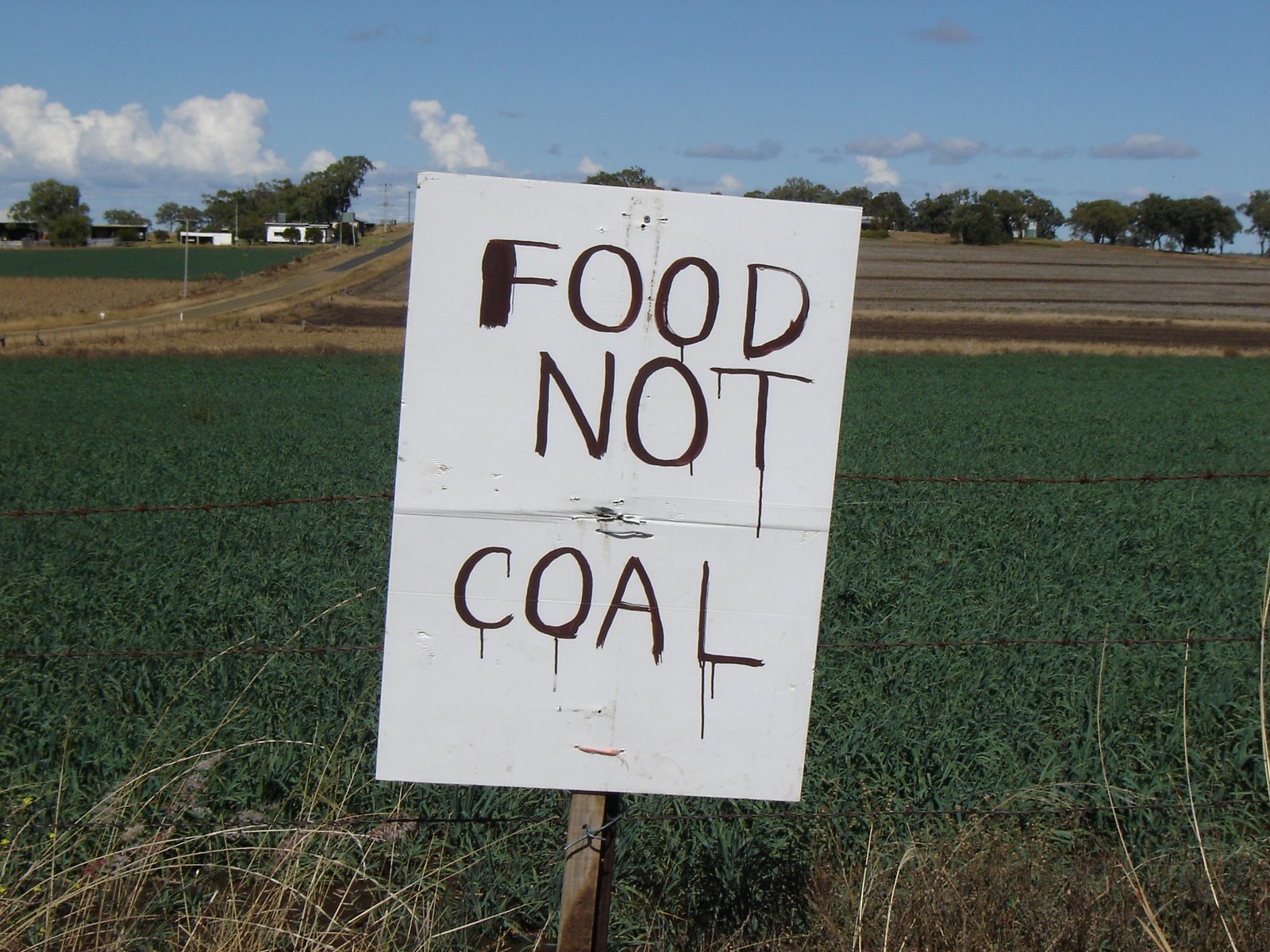
Spokesman Rob McCreath said “The mining boom is out of control. Areas such as Felton, Jimbour, and Warra are the jewels in the crown of rural Queensland. The Premier must act now to protect our food bowl from destruction.”

The group set up a mock lunch table on the pavement outside the office, with a plate of coal for the Premier’s lunch, and a glass of polluted water.

The protesters shared their own picnic lunch with onlookers – a picnic made from fresh Darling Downs ingredients.

Thursday, October 30, 2008

Lunch with Anna

Friends of Felton

Invite you to

Lunch with Anna

12.30pm Friday 31st October

Venue : Anna Bligh’s electorate office, 90 Vulture St, West End, Brisbane.

We’re having : A picnic made from finest Darling Downs ingredients.

She’s having : A plate of coal, washed down by polluted water.

RSVP
Friends of Felton

Menu

There’s nothing like a coal lunch……….

Appetisers
Fresh compote of carbonated leachate a-la-Ambre.

Mine Course
Chargrilled anthracite, aged to perfection ( 400 million years), marinated in D.M.E. and topped with syngas sauce.

Dessert
Unlikely – due to colic!


It’s alimentary dear Bligh, coal is unpalatable, indigestible, and a Bligh-t on the land. Felton food is forever!


www.friendsoffelton.blogspot.com

Our Aim – For the Qld Government to legislate to protect prime agricultural land from myopic mining madness.


GOVERNMENT HEALTH WARNING : COAL IS ADDICTIVE

Friday, October 10, 2008

Film & Information Evenings well attended


Friends of Felton organised 2 very successful Film & Information Evenings in Pittsworth and Toowoomba on Wednesday and Thursday. 190 people attended, including several TRC councillors. The event was billed as "Coal Mining in our Backyard - How will it affect us? What can we do?"

The film "Rivers of Shame 2" was shown, which highlights the impact of mining on rivers, aquifers, and local communities. It was produced by the Rivers SOS Group in NSW.

Chair of Friends of Felton, Rob McCreath, gave a presentation to demonstrate the extent of the coal mining industry on the Darling Downs at present, and to show which areas are currently covered by Exploration Permits.

"Many people are blissfully unaware that virtually the entire Darling Downs is under threat from the mining industry. This land is amongst the very best in Australia, and we must act quickly to pressure the Qld Government to protect it from mining, before it is too late. The imminent construction of the "Missing Link" rail line from Wandoan to Banana will allow the export of coal from the Darling Downs through the port of Gladstone. A large number of companies are keen to develop mines in prime agricultural areas such as Felton, Cambooya, Jimbour, and Warra. Some of these areas, such as Hodgson Vale and Wyreema are virtually in the suburbs of Toowoomba."

On Friday Ambre Energy applied for a Mining Lease at Felton. They propose building a 12.8Mt/yr open cut mine, and a petrochemical plant to convert the coal to liquid fuel.

"The Felton Project would have a horrendous impact on the environment, affecting the entire Toowoomba Region and beyond. It would poison our water supplies, and emit toxic pollution into the air. If the Felton Project is allowed to go ahead, it will be virtually impossible to stop the others, because they will seem clean in comparison" said Mr McCreath.


Dr Pauline Roberts, from the Caroona Coal Action Group, Liverpool Plains, NSW, highlighted how toxic coal is to human and environmental health. She said -

"Elements such as arsenic, mercury, lead, cadmium, selenium, nickel, vanadium and copper are accumulated and concentrated within coal and associated strata.

Radioactive elements such as uranium, thorium and radium (the latter which decays to radon gas) are also accumulated and concentrated within coal strata. These are toxic in their own right and toxic via the radioactivity they emit.

Coal seams, even those considered ‘low sulphur’ contain significant amounts of sulphur and sulphides whose bio-toxicity increases when exposed to air or water.

The fine particulate nature of coal dust, and the toxic constituents therein are readily inhaled and lodge in the lungs as well as being ingested.

Coal strata also contain hydrocarbons and benzene-ring derivatives within their organic layers that are considered carcinogenic.

Any water that is found within coal strata will be saline in nature, contaminated with organic derivatives and toxic and heavy metals.

Children, with their increased needs for minerals are particularly at risk from heavy metal toxicity. Some of these metals, like lead, have half lives in the body of 20 years, which means that their effects will only be truly known over several decades."

Dr Roberts warned a large part of State Government mining royalties should be allocated to the Health budget to cope with the long-term impact of the present mining boom.

Acland farmer Sid Plant spoke of his family's experience of living next to the New Acland mine. He told the meeting of the constant noise from blasting and heavy machinery, saying he hadn't slept properly at night for the first 18 months. He described the dust cloud which had aggravated his wife's asthma, and contaminated their drinking water. They now drank filtered bore water, as they could no longer drink the water collected from their roof. He pointed out the favourable treatment mining companies get from the State Government. "New Hope are putting in a water pipeline to supply their proposed mine expansion, before the EIS process has been completed." He said.

Thursday, October 2, 2008

Toowoomba Regional Council must protect good agricultural land.

MEDIA RELEASE 2nd October 2008

Friends of Felton

Toowoomba Regional Council must protect good agricultural land.


Friends of Felton welcomes today’s announcement from Dalby Regional Council that it is taking steps to map and identify areas of good agricultural land, in order to protect it from mining.

The Felton Valley is under threat from a proposal by Ambre Energy to build a 12.5 million t/yr open-cut coal mine and associated petrochemical plant to convert the coal into liquid fuel.

Spokesman Rob McCreath said-
“The coal mining industry is out of control. Left unchecked, it will destroy a huge area of prime farmland across the Darling Downs. Areas such as Felton are unique, and should be preserved to guarantee Australia’s food production for the future. We call on Mayor Peter Taylor and Toowoomba Regional Council to follow the example set by Dalby Regional Council, and protect our food bowl.”

ENDS

Wednesday, October 1, 2008

Climate Emergency Rally


Friends of Felton took part in the Climate Emergency Rally at Parliament House in Brisbane on Sunday.


Spokesman Rob McCreath addressed the crowd, and pointed out the huge environmental impact of the proposed Felton coal-to-liquids project. "Ambre Energy's own figures show their petrochemical plant would produce 3 tonnes of CO2 for every tonne of fuel produced.The open-cut mine would release large amounts of methane to the atmosphere, with serious climatic consequences."He said that agriculture was under attack from coal mining on two fronts. "Large areas of prime farmland are directly threatened with destruction, whilst climate change accelerated by the burning of coal is causing more frequent and severe droughts."


Paul Benedek, rally organiser from the Climate Emergency Network, said "Emissions cannot be allowed to increase. A tripling of coal production-as is planned by the Queensland Government-is an utter insanity that must be stopped. We are rallying to demand a massive shift to renewable energy, to public transport, and to sustainability. It is ironic that we are seeing a global plan putting $800bn into bailing out merchant banks, and yet there is seemingly nothing to bail out the planet that we live and depend on."


To listen to Rob's speech, click on the link below-