By Craig Johnstone
April 23, 2009 12:00am
TENS of millions of dollars of taxpayer money is in jeopardy as the State Government considers walking away from its $125 million clean-coal project.
ZeroGen Pty Ltd - developed during the "Smart State" era - should be sold off or wound up, an independent review of Government bodies and authorities has found. The Weller Review said ZeroGen "has significant financial responsibilities in a highly technical, if not speculative, area". The Government will accept the recommendation.
ZeroGen, to which the Government has committed more than $100 million, plans to capture carbon dioxide emissions and bury them underground, a technology that has been hailed as the future of the coal industry. It had aimed to develop the world's first clean-coal power plant near Rockhampton by 2012.
But recent doubts have emerged about the project's viability because of the way it would be treated under the Rudd Government's proposed emissions trading scheme.
The State Government said it would investigate whether ZeroGen should be sold or wound up.
The State Government has placed great faith in clean-coal technology, saying it has the potential to cut up to 90 per cent of greenhouse gas emissions from large-scale power generation.
In a statement, Energy Minister Stephen Robertson said the Government remained "committed to accelerating the deployment of low-emission coal technologies before 2020". "The future direction of ZeroGen will be determined by Government in consultation with industry partners," Mr Robertson said.
The project, a key plank of the Government's superseded Smart State strategy, was expected to generate up to 700 jobs during its construction phase and 125 jobs once it was operational.
The company is due to complete a feasibility study into the technology the end of the year.
In March last year, Premier Anna Bligh said that, although Zerogen was a government-initiated project, it needed other "substantial funding contributors".
She said while the coal industry and energy company Shell were strong supporters, it also needed Federal Government and private support.
Thursday, April 23, 2009

Monday, April 6, 2009
Clean coal remains a faraway dream
.JPG)
More bad news for Clean Coal -
Clean coal remains a faraway dream
Marian Wilkinson , Sydney Morning Herald
April 6, 2009
When the Academy Award-winning filmmakers Joel and Ethan Coen used their talents a few weeks ago to make an anti-ad ridiculing clean coal, industry lobbyists were not happy. When Robert Kennedy jnr branded clean coal in America "a dirty lie", and suggested some coal executives should face criminal charges, they got really upset. This state's most passionate coal advocate, the head of the NSW Minerals Council, Nikki Williams, reacts to Kennedy's name with a mix of outrage and sorrow.
But the coal industry and, more importantly, Australia's politicians, should come to grips with the reality that it is beginning to lose its social licence to operate in Western democracies. And the strategy of holding up clean coal as the Holy Grail for the industry's greenhouse problem is not working.
Australia is increasingly seen as the Saudi Arabia of coal - a leading exporter of a major greenhouse gas pollutant. Despite the present economic downturn, industry and government forecasts say our coal exports will keep rising in the next decades. The NSW Government is issuing new exploration licences like they were confetti, and the expansion of the Newcastle coal loader is a national and state priority.
All this flies in the face of the scientific forecasts delivered in Copenhagen last month. Unless there are rapid and sustained cuts in greenhouse emissions, the world will not avoid dangerous climate change.
High-profile figures such as the former US vice-president Al Gore, and a NASA climate scientist, James Hansen, advocate a moratorium on new coal plants in the US and Britain unless and until clean coal comes good. Similar public pressure is likely to come in Japan, our largest coal customer.
The irreconcilable gulf between our rising coal exports and the urgent need to cut emissions is answered too glibly with the assurance that clean coal will be up and running some time around 2020. From Barack Obama to Kevin Rudd, clean coal is pushed with unswerving conviction. The big Group of Eight leaders say they want 20 clean coal plants operating by 2020.
Yet at a NSW Minerals Council forum last week, CSIRO's chief of energy technology, David Brockway, explained bluntly that we are unlikely to see a commercial-scale clean coal plant operating within 15 years - or at least 2024.
Dr Brockway, like those close to this vexed problem in the industry, avoids the words "clean coal". The complex array of technologies to reduce carbon dioxide from coal generation plants, capture it, transport it and store it underground is known as "carbon capture and storage". Building a "demonstration" or "pilot" to capture and store a few thousand tonnes of carbon dioxide is being done. But getting rid of a million tonnes of carbon dioxide from electricity generators around the country every year, at an affordable cost, will be extremely difficult for us, let alone our export customers.
This month, the Rudd Government will, once again, ramp up its clean coal campaign when it announces the new head of the global carbon initiative in Canberra. But forgive a journalist a little cynicism. Last year, the media were lobbied heavily to promote a carbon storage project run by the gas company Santos that promised to bury 20 million tonnes of carbon dioxide a year from gas and coal operations around the country. Last month, without a whimper, Santos suspended the project, apparently because it wasn't considered economically viable.
A joint Rio Tinto-BP carbon capture project in Western Australia, also lauded in the media, fell over last year. Around the same time, the world's leading clean coal experiment, FutureGen in America, collapsed after the Bush administration slashed its commitment to the billion-dollar project. FutureGen was a favourite of the Howard government, which pledged $15 million from Australian taxpayers along with a slice of industry funds.
A damning report on FutureGen prepared for a US congressional committee surfaced a few weeks ago. Based on scores of internal government emails and documents, it reveals that the Bush administration was never really committed to the project. FutureGen, the report says, was largely a public relations ploy for George Bush to make it appear that the US was "doing something" about global warming while refusing to ratify the Kyoto climate agreement.
There is no easy solution to the coal problem. Almost every energy minister around the world insists coal will remain a significant source of new electricity generation because of its low cost and plentiful supply. But at the very least, federal and state politicians should have the courage to prepare a plan B, in the event the alluring promise of clean coal does not eventuate.
Marian Wilkinson is the Herald's environment editor.
Scrap coal plan, says Rudd's man
Article from Sydney Morning Herald -
Scrap coal plan, says Rudd's man
Matthew Moore, Urban Affairs Editor , Sydney Morning Herald
April 1, 2009
A MEMBER of the Rudd Government's group charged with rebuilding Australia's infrastructure says plans to double the coal export capacity in Newcastle should be abandoned.
Professor Peter Newman, who is a member of Infrastructure Australia, said the environmental damage done from burning coal meant the construction of new coal loading facilities in what is already the world's biggest coal exporting port should be stopped now.
"If I was in charge of coal loading facilities, I would say no, don't do it," Professor Newman said in an interview with the Herald.
Professor Newman also dismissed the Federal Government's $500 million commitment into researching clean coal technology, arguing there was little prospect the technology to capture and store carbon emissions would be developed sufficiently to make coal-fired power stations environmentally acceptable.
"I don't think the science on that is anywhere near that happening," he said. "In the US it's already disappearing … it's going to disappear along with nuclear fission."
Clean coal technology is one of the key pillars of the environment policies of Commonwealth and state Labor governments. While it has been criticised by environmentalists, Professor Newman's remarks dismissing its prospects are certain to embarrass these governments and the Federal Minister for Infrastructure, Anthony Albanese. Professor Newman is one of 11 members of the body Mr Albanese appointed last year to develop "a blueprint for unlocking infrastructure bottlenecks and modernising the nation's transport, water, energy and communications assets".
To boost coal exports Mr Rudd and Mr Albanese announced in December the Government would co-fund almost half of a $1.2 billion project with the private sector to expand Hunter Valley rail lines. Under the plan, six rail projects would help Newcastle double its coal exports within seven years.
Professor Newman predicted that while the coal industry would still be around in a decade, "there will be a painful transition" and "coal will be a declining export for Australia".
Scrap coal plan, says Rudd's man
Matthew Moore, Urban Affairs Editor , Sydney Morning Herald
April 1, 2009
A MEMBER of the Rudd Government's group charged with rebuilding Australia's infrastructure says plans to double the coal export capacity in Newcastle should be abandoned.
Professor Peter Newman, who is a member of Infrastructure Australia, said the environmental damage done from burning coal meant the construction of new coal loading facilities in what is already the world's biggest coal exporting port should be stopped now.
"If I was in charge of coal loading facilities, I would say no, don't do it," Professor Newman said in an interview with the Herald.
Professor Newman also dismissed the Federal Government's $500 million commitment into researching clean coal technology, arguing there was little prospect the technology to capture and store carbon emissions would be developed sufficiently to make coal-fired power stations environmentally acceptable.
"I don't think the science on that is anywhere near that happening," he said. "In the US it's already disappearing … it's going to disappear along with nuclear fission."
Clean coal technology is one of the key pillars of the environment policies of Commonwealth and state Labor governments. While it has been criticised by environmentalists, Professor Newman's remarks dismissing its prospects are certain to embarrass these governments and the Federal Minister for Infrastructure, Anthony Albanese. Professor Newman is one of 11 members of the body Mr Albanese appointed last year to develop "a blueprint for unlocking infrastructure bottlenecks and modernising the nation's transport, water, energy and communications assets".
To boost coal exports Mr Rudd and Mr Albanese announced in December the Government would co-fund almost half of a $1.2 billion project with the private sector to expand Hunter Valley rail lines. Under the plan, six rail projects would help Newcastle double its coal exports within seven years.
Professor Newman predicted that while the coal industry would still be around in a decade, "there will be a painful transition" and "coal will be a declining export for Australia".
Wednesday, March 18, 2009
Wheelbarrow Diplomacy

Friends of Felton took Toowoomba by storm on Monday when they descended on the city centre armed with wheelbarrows full of vegetables.

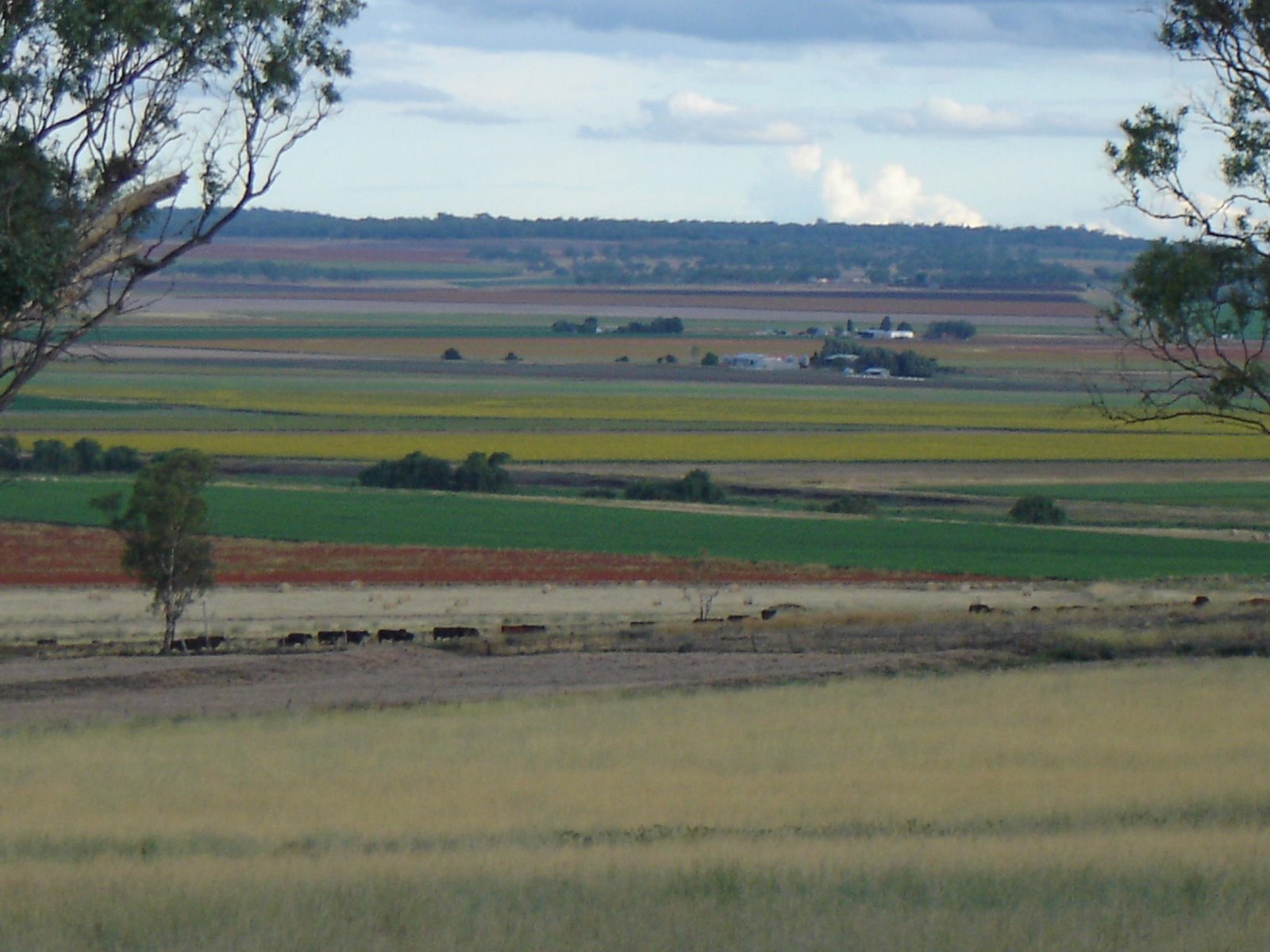
Recent research has revealed the Felton/ Cambooya/Wyreema district supports a horticultural industry earning over $23million/yr and employing over 340 people. Every week, these farms produce 750,000 lettuces, 65,000 cauliflowers, and 60,000 bunches of celery.

If the Felton project is allowed to proceed, it would set a precedent for other mining projects right across the Toowoomba region. New Hope Coal has identified coal deposits at Wyreema, Pittsworth, Wellcamp, and Mount Russell. Coalworks Ltd is studying the feasibility of a mine at Hodgson Vale - a suburb of Toowoomba City.
Let's put a stop to this madness.
Thursday, March 12, 2009
LNP promises to protect Felton
Toowoomba Chronicle report 6-3-09
LNP leader Lawrence Springborg yesterday tapped into his supporter heartland by promising to protect areas like the Felton Valley and Haystack Plain from mining.
Mr Springborg promised his party would put into place "planning processes" to protect the two areas from mining development.
"These are iconic areas," Mr Springborg said. "It’s stupid to be mining areas as irreplaceable as those."
He was speaking at a Chamber of Commerce luncheon at Picnic Point.
Prime Darling Downs agricultural land in the Felton Valley, south of Toowoomba, has been threatened by a proposed open cut coal mine and petrochemical plant by mining and exploration company, Ambre Energy.
Meanwhile, the Haystack Plain is under a Mineral Development Licence held by State-owned corporation, Tarong Energy.
LNP candidate for Condamine Ray Hopper said the policy announcement came after a lot of "lobbying and discussion" with the LNP leader.
"You’ve heard it from the boss today," Mr Hopper said.
"We will not allow mining at Felton or Haystack if we are elected on March 21."
Friends of Felton is an apolitical organisation. We are pleased that the LNP has promised to protect Felton, and call on the other parties in the Qld election to make the same commitment.
LNP leader Lawrence Springborg yesterday tapped into his supporter heartland by promising to protect areas like the Felton Valley and Haystack Plain from mining.
Mr Springborg promised his party would put into place "planning processes" to protect the two areas from mining development.
"These are iconic areas," Mr Springborg said. "It’s stupid to be mining areas as irreplaceable as those."
He was speaking at a Chamber of Commerce luncheon at Picnic Point.
Prime Darling Downs agricultural land in the Felton Valley, south of Toowoomba, has been threatened by a proposed open cut coal mine and petrochemical plant by mining and exploration company, Ambre Energy.
Meanwhile, the Haystack Plain is under a Mineral Development Licence held by State-owned corporation, Tarong Energy.
LNP candidate for Condamine Ray Hopper said the policy announcement came after a lot of "lobbying and discussion" with the LNP leader.
"You’ve heard it from the boss today," Mr Hopper said.
"We will not allow mining at Felton or Haystack if we are elected on March 21."
Friends of Felton is an apolitical organisation. We are pleased that the LNP has promised to protect Felton, and call on the other parties in the Qld election to make the same commitment.
Wednesday, February 25, 2009
Keep Coal out of our Salad Bowl
Recent research by Friends of Felton has produced some staggering statistics on the scale of the booming horticulture industry on the Western outskirts of Toowoomba. Vegetable growers in the area from Felton through Cambooya to Wyreema have a combined annual turnover of over $23 million/year, and employ more than 340 people.
Every week, these farmers produce 750,000 lettuces, 65,000 cauliflowers, 60,000 bunches of celery, and 18,000 cabbages. Every year they produce 2000 tonnes of onions, and 500 tonnes of potatoes.
This district is ideally suited to horticulture, due to the ideal climate, quality of water and fertile soils. The Eastern Downs is seasonally out of phase with the Lockyer Valley and, therefore, can ensure continuity of supply to South-East Queensland markets.
If the Felton project is allowed to proceed, a number of other mining developments are waiting in the wings. In their Annual Report 2008, Ambre Energy describe coal deposits they have identified at Scrubby Mountain (Pittsworth), and Back Plains. New Hope Corporation, operators of New Acland mine, have earmarked coal deposits at Pittsworth, Mt Russell, and Wyreema (Directors Report July 2008).
Friends of Felton are committed to stopping the Felton project, and defending the Darling Downs from mining.
Every week, these farmers produce 750,000 lettuces, 65,000 cauliflowers, 60,000 bunches of celery, and 18,000 cabbages. Every year they produce 2000 tonnes of onions, and 500 tonnes of potatoes.
This district is ideally suited to horticulture, due to the ideal climate, quality of water and fertile soils. The Eastern Downs is seasonally out of phase with the Lockyer Valley and, therefore, can ensure continuity of supply to South-East Queensland markets.
If the Felton project is allowed to proceed, a number of other mining developments are waiting in the wings. In their Annual Report 2008, Ambre Energy describe coal deposits they have identified at Scrubby Mountain (Pittsworth), and Back Plains. New Hope Corporation, operators of New Acland mine, have earmarked coal deposits at Pittsworth, Mt Russell, and Wyreema (Directors Report July 2008).
Friends of Felton are committed to stopping the Felton project, and defending the Darling Downs from mining.
Saturday, January 31, 2009
The truth begins to emerge
Ambre Energy has released an Initial Advice Statement(IAS) for their proposed Felton coal-to-liquids & CO2 project. This coincides with the publication by the EPA of the draft Terms of Reference for the so-called "Felton Clean Coal Demonstration Project". For full details, including the opportunity to comment, go to www.epa.qld.gov.au/search?term=felton
This IAS is the 3rd from Ambre in 12 months, and is remarkable for its lack of detail. The 1st IAS (the Initial IAS), dated Feb 2008, ran to 33 pages. The 2nd, dated July 2008, has 45 pages, but the 3rd, dated December 2008, has only 16 pages.
Perhaps we should look elsewhere for the finer details. How about these snippets from www.coal.erisk.net (Nov 2008) -
Ambre Energy coal gasification converts 95pc of coals carbon into synthetic gas (CO + H2); but where to put the CO2?
Felton Locals were more than happy with the wider economic benefits - despite minor downsides - Jason Russell, Exploration Manager, Ambre Energy, told Gas Week.(What planet does he live on???) Ambre Energy - which planned to list in 2009 - would make money with its planned new coal mine but it would also make dust, huge piles of coal-ash and CO2; and would crack underground water systems. Ambre planned to sell purified CO2, (as does Wesfarmers in Western Australia, from its ammonia plant). Tree-planting on ash piles: The idea was it would plant trees and keep dust down by water spraying supplemented with dust suppressant agents.
Ambre Energy’s giant coal mine plan: ship CO2 1200 kilometers to Moomba; if price of carbon gets high enough
Ambre Energy's planned giant coal mine generation were said to create units one-half to one-third of CO2 from a conventional coal fired power station. Typical sub-critical coal fired power stations generate carbon dioxide at approximately 1000kgCO2/MWh, it said. However the cost of shipping carbon to Moomba was over $20/ tonne so it was cheaper to pay the carbon permit price, Jason Russell, Exploration Manager, Ambre Energy told Gas Week.
Ambre Energy’s giant Queensland coal mine will use or destroy ground water resources in the coal seam zone of Walloon coal measure, and Hodgson Creek.
Ambre Energy’s plans for a gigantic coal mine, fuel plant and CO2 dump near Toowoomba, Queensland was frank in its report of the impact of water resources; ‘The water from these resources (is) fully allocated to the farming community, discussions will be held with DNRW as to the process required to access these resources'. Will damage groundwater: 'Initially mining will intersect ground water resources in the Walloon coal measure and although unlikely, may intersect groundwater in the alluvials of Hodgson Creek'.
Or how about this from Ambre Energy's submission to the Federal Government's Carbon Pollution Reduction Scheme Green Paper -
Ironically, although coal gasification is seen as our best chance of reducing the world’s greenhouse gas emissions, the introduction of the Carbon Pollution Reduction Scheme in 2010 has the potential to impact adversely on the development of this technology in Australia for at least 2 reasons:
1. The Scheme adds to the already high commercial risks associated with these types of projects. The cost of purchasing carbon pollution permits comes on top of the high capital costs of coal gasification plants and the difficulty of attracting project finance because of the relative novelty of the technology.
2. While the technology for capturing pure CO2 from syngas is well advanced, the technology associated with geosequestration of CO2 requires further development. There is much confidence about the ultimate prospects for low-cost commercial geosequestration, but during this "gap", coal gasification plants will have no option but to purchase carbon pollution permits.
Mitigating the Negative Impacts of the Scheme
The simplest way to mitigate the negative impacts of the Scheme on proposed coal gasification projects would be to grant such projects an initial ‘holiday’ of a specified period of years during which time carbon pollution permits would be provided at no cost for all or most of the CO2 emissions generated by the project. This would have the effect of reducing some of the financial risks associated with the project.
Alternatively, financial assistance could be offered in other forms, for example, by way of government loans or loan guarantees for qualifying projects (compare the US Department of Energy’s Loan Guarantee Scheme).
Unless appropriate assistance is offered to these projects, there is a very strong possibility that coal gasification technology will not be established in Australia by commercial operators for many years, if ever.
So, it's not clean after all, and they want taxpayers to pay for their pollution.
Here's a suggestion - until geosequestration of CO2 is proven to work practically & economically, leave the coal in the ground and give Govt assistance to renewable energy, which is already proven, does not trash our environment, coexists easily with top quality food production, and would provide lots of jobs.
This IAS is the 3rd from Ambre in 12 months, and is remarkable for its lack of detail. The 1st IAS (the Initial IAS), dated Feb 2008, ran to 33 pages. The 2nd, dated July 2008, has 45 pages, but the 3rd, dated December 2008, has only 16 pages.
Perhaps we should look elsewhere for the finer details. How about these snippets from www.coal.erisk.net (Nov 2008) -
Ambre Energy coal gasification converts 95pc of coals carbon into synthetic gas (CO + H2); but where to put the CO2?
Felton Locals were more than happy with the wider economic benefits - despite minor downsides - Jason Russell, Exploration Manager, Ambre Energy, told Gas Week.(What planet does he live on???) Ambre Energy - which planned to list in 2009 - would make money with its planned new coal mine but it would also make dust, huge piles of coal-ash and CO2; and would crack underground water systems. Ambre planned to sell purified CO2, (as does Wesfarmers in Western Australia, from its ammonia plant). Tree-planting on ash piles: The idea was it would plant trees and keep dust down by water spraying supplemented with dust suppressant agents.
Ambre Energy’s giant coal mine plan: ship CO2 1200 kilometers to Moomba; if price of carbon gets high enough
Ambre Energy's planned giant coal mine generation were said to create units one-half to one-third of CO2 from a conventional coal fired power station. Typical sub-critical coal fired power stations generate carbon dioxide at approximately 1000kgCO2/MWh, it said. However the cost of shipping carbon to Moomba was over $20/ tonne so it was cheaper to pay the carbon permit price, Jason Russell, Exploration Manager, Ambre Energy told Gas Week.
Ambre Energy’s giant Queensland coal mine will use or destroy ground water resources in the coal seam zone of Walloon coal measure, and Hodgson Creek.
Ambre Energy’s plans for a gigantic coal mine, fuel plant and CO2 dump near Toowoomba, Queensland was frank in its report of the impact of water resources; ‘The water from these resources (is) fully allocated to the farming community, discussions will be held with DNRW as to the process required to access these resources'. Will damage groundwater: 'Initially mining will intersect ground water resources in the Walloon coal measure and although unlikely, may intersect groundwater in the alluvials of Hodgson Creek'.
Or how about this from Ambre Energy's submission to the Federal Government's Carbon Pollution Reduction Scheme Green Paper -
Ironically, although coal gasification is seen as our best chance of reducing the world’s greenhouse gas emissions, the introduction of the Carbon Pollution Reduction Scheme in 2010 has the potential to impact adversely on the development of this technology in Australia for at least 2 reasons:
1. The Scheme adds to the already high commercial risks associated with these types of projects. The cost of purchasing carbon pollution permits comes on top of the high capital costs of coal gasification plants and the difficulty of attracting project finance because of the relative novelty of the technology.
2. While the technology for capturing pure CO2 from syngas is well advanced, the technology associated with geosequestration of CO2 requires further development. There is much confidence about the ultimate prospects for low-cost commercial geosequestration, but during this "gap", coal gasification plants will have no option but to purchase carbon pollution permits.
Mitigating the Negative Impacts of the Scheme
The simplest way to mitigate the negative impacts of the Scheme on proposed coal gasification projects would be to grant such projects an initial ‘holiday’ of a specified period of years during which time carbon pollution permits would be provided at no cost for all or most of the CO2 emissions generated by the project. This would have the effect of reducing some of the financial risks associated with the project.
Alternatively, financial assistance could be offered in other forms, for example, by way of government loans or loan guarantees for qualifying projects (compare the US Department of Energy’s Loan Guarantee Scheme).
Unless appropriate assistance is offered to these projects, there is a very strong possibility that coal gasification technology will not be established in Australia by commercial operators for many years, if ever.
So, it's not clean after all, and they want taxpayers to pay for their pollution.
Here's a suggestion - until geosequestration of CO2 is proven to work practically & economically, leave the coal in the ground and give Govt assistance to renewable energy, which is already proven, does not trash our environment, coexists easily with top quality food production, and would provide lots of jobs.
Subscribe to:
Posts (Atom)


.JPG)