Wednesday, September 30, 2009

Senate Committee visits Felton

The Senate Inquiry into the impacts of mining in the Murray Darling Basin came to Felton yesterday. Four senators came from the Senate Standing Committee on Environment, Communications and the Arts: Sen Simon Birmingham - LP, SA, chair; Sen Anne McEwen -ALP, SA, deputy chair; Sen Scott Ludlam - Aust Greens; Sen John Williams - NATS, NSW.


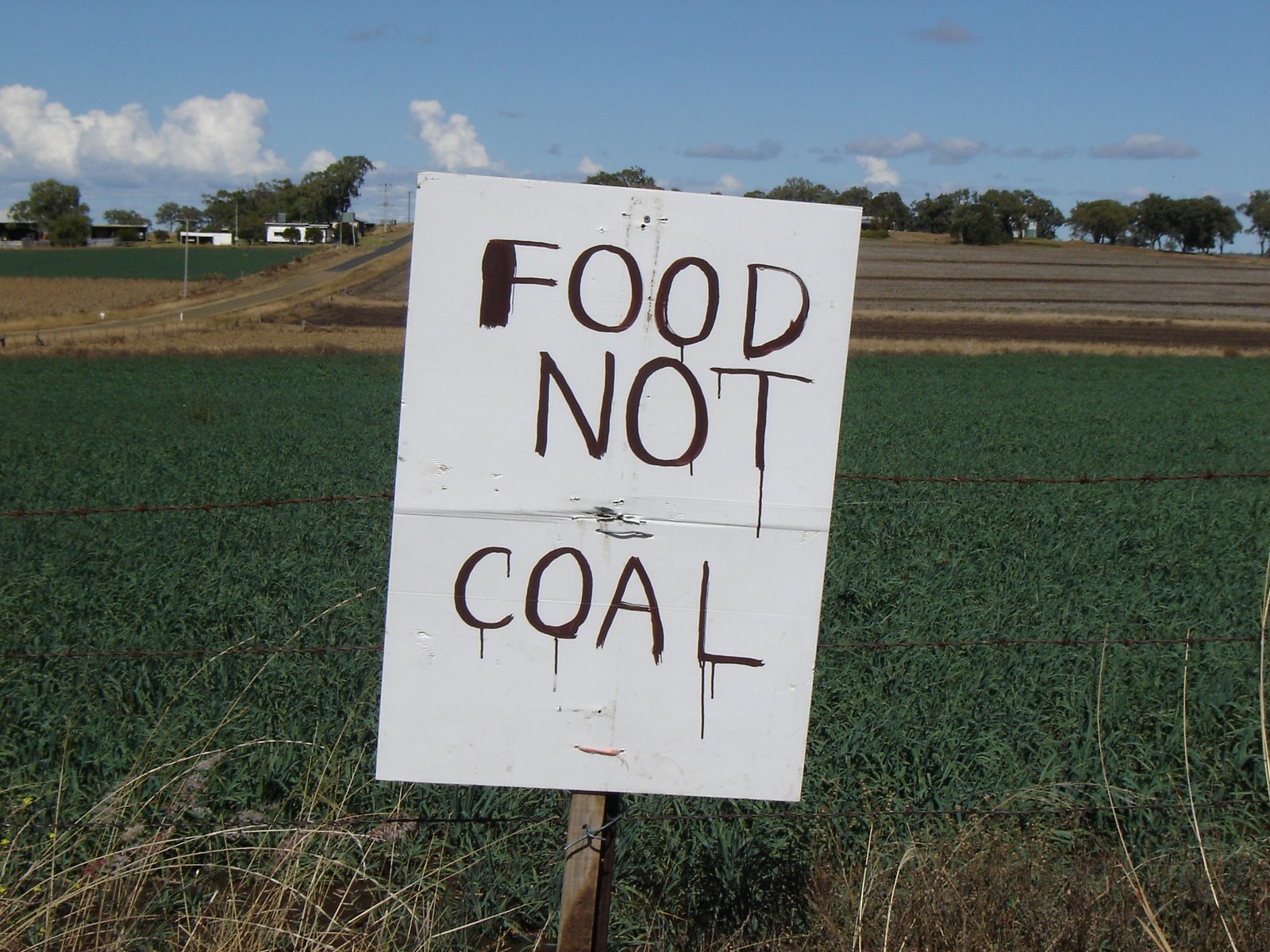
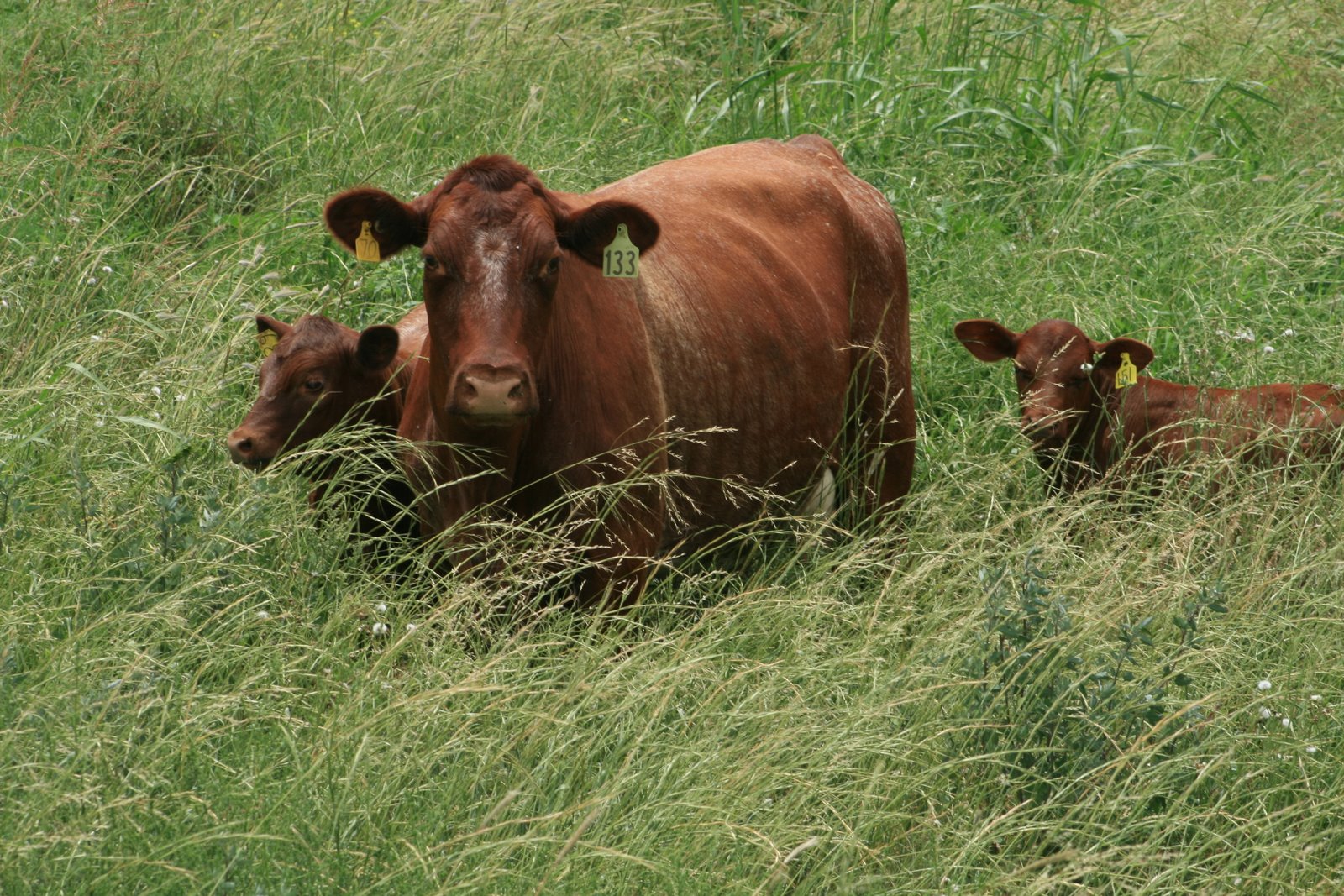
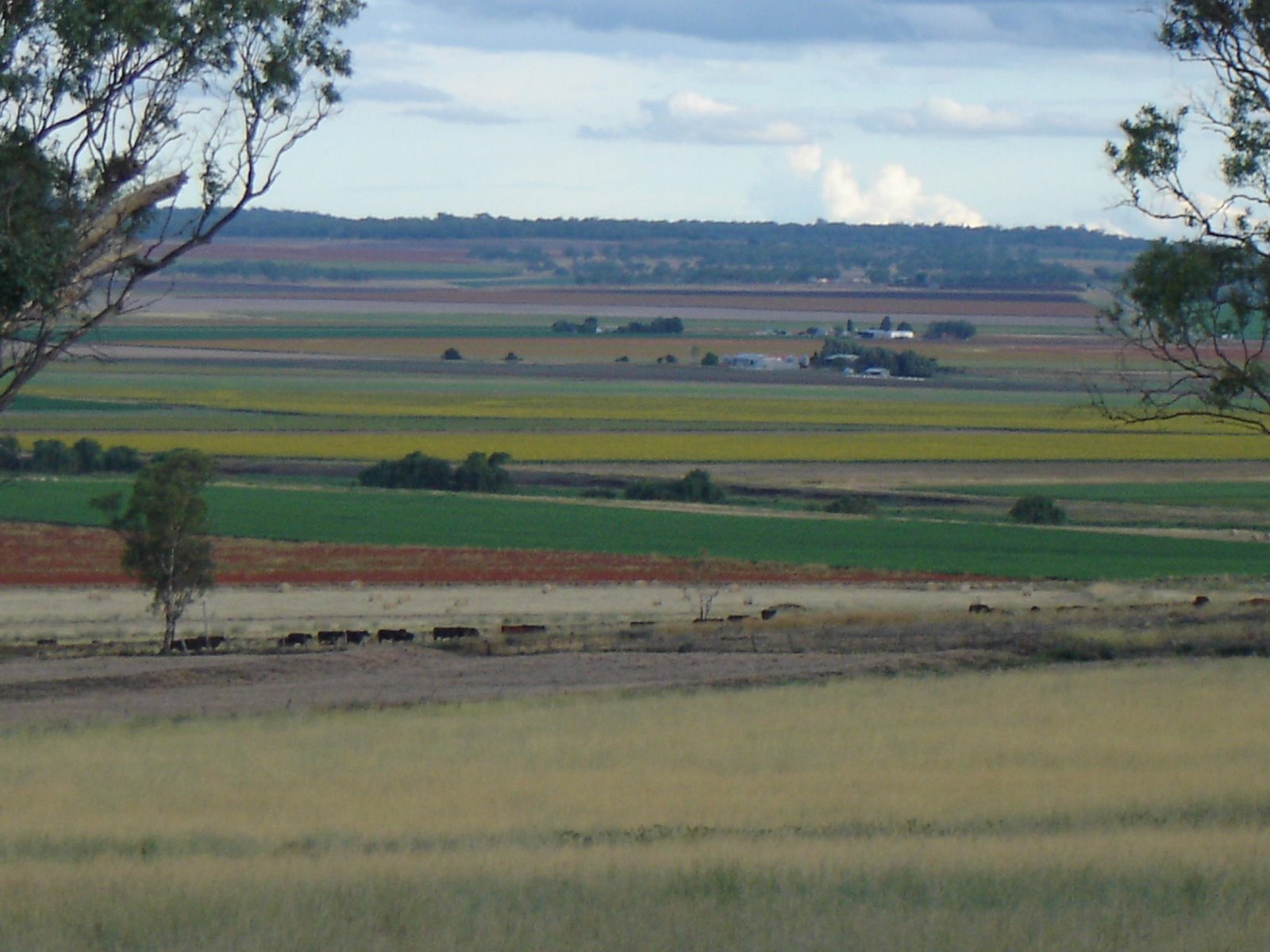
The large crowd of FOF members appreciated the opportunity to inform the committee of the proposed layout for Ambre Energy's so-called Felton 'Clean Coal' Project. They pointed out the quality of the surrounding farmland, the proximity to Hodgson Creek, the importance of the nearby hills as recharge areas for underground aquifers, and the number of people that live in the area.

After visiting the Felton Valley, the committee toured the Acland area, viewing the devastation caused by the New Acland open-cut coal mine, and visiting the ghost town of Acland - itself under threat from the expanding mine.


Watch a video of the senators visit here from Qld Country Life.

Saturday, September 19, 2009

Friends of Felton supports Toowoomba's 60th Carnival of Flowers

Friends of Felton once again entered a float in Toowoomba's Carnival of Flowers parade. This years event was the 60th, and drew a huge crowd of 100,000 spectators. Our float showcased the variety of food produced in the Felton Valley, and also carried a windmill and solar panel, to represent our interest in renewable energy as an alternative to coal development.


Our float was preceded by a group of Felton youngsters from 3 families that have been in the area for up to 6 generations.


Monday, September 14, 2009

Cakes against Coal


Friends of Felton organised a very successful cake stall in Pittsworth on Friday. We are raising funds to employ professional consultants to prepare our case against Ambre Energy’s Mining Lease application at Felton.

Organiser Andrea Sullivan said the local community had been very supportive. “It was a great opportunity for us to earn some money, and at the same time inform the people of Pittsworth of the serious consequences for the town and surrounding area if mining is allowed to go ahead at Felton. It would open the floodgates to more mining all around Pittsworth. We’ve seen what’s happened to Acland and we don’t want that to be repeated here” she said.

The cake stall raised $700. The raffle was won by the Free family. Friends of Felton have many more activities planned, including a float in the Toowoomba Carnival Of Flowers parade, a night at Toowoomba Rep Theatre on 26th Sept, and a Race Day at Clifford Park, Toowoomba, on 24th October. Enquiries and tickets - friendsoffelton@live.com

Sunday, August 30, 2009

We must learn from the Hunter Valley experience

Renewable Energy as an alternative to Coal Development


We know we cannot co-exist with coal mines, petrochemical plants and power stations. On the other hand we CAN co-exist with renewable energy, which would preserve our precious farmland, protect our environment, and safeguard our community.

To that end, FOF invited Trevor Berrill to come to Felton to look at the renewable energy potential. Trevor is one of Queensland's most respected Sustainable Energy Systems consultants.

After touring the Felton area on Saturday morning, Trevor gave a fascinating talk to around 60 people at Cambooya Bowls Club in the evening. Some of the key points are detailed below.

Trevor Berrill. Presentation - Cambooya 29 Aug 09
Only Renewable Energy and Energy Efficiency provide immediate CO2 Reductions

We have RE & EE technologies now. We know how to use RE & EE, and it doesn’t cost the earth. Failing to use it may.

Current energy pathway is unsustainable –business as usual is no longer an option.

Costs of greenhouse response NOW will be small: about 1% of annual global GDP by 2050 (ref Stern).

Current World Energy Supply
Non renewable: 91%
Renewable: 9%

Global Renewable Energy Resource
15,000 x Current Energy Use

Solar Power
Qld Resource: MASSIVE
Require < 23 x 23 km to meet all current Qld electricity demand.

WindPower
Qld Resource - 10TWh/yr at <10c/kWh = 20% current demand (CSIRO 2007).

“Clean” Coal
• Oxymoron - inherently ‘dirty fuel’
• Pollution – costly
• Limited resource life
• Inefficient conversion
• Nimbyism
• 1000 yrs Waste Disposal and Storage problems– beyond civilisations
• Future hidden & external costs

There is NO clean coal technology available NOW

Energy Efficiency
Transport: Of the fuel used by a car, 80% heats the engine, 19% moves the weight of the car, 1% moves the weight of the driver.

Lighting: An incandescent lightbulb powered by electricity from a coal-fired power station uses only 2% of the energy in the coal. 98% is lost.


Direct Local Jobs per Unit of Electricity Generated
Coal electricity + coal mining - 1job.
Wind power with 50% Australian content 2–3 jobs(ref Diesendorf).

Strong Sustainable Energy Policy for Qld
• Set a 40% renewable energy target by 2020.

• Set a target of a 10 percent annual reduction in energy consumption to 2020.

• Undertake energy, material waste and water audits of all homes and businesses.

• Remove market barriers to the uptake of renewable energy and energy efficiency technologies.

• Apply Polluter Pays Principle - Stop subsidising the fossil fuel industry.

• Ensure that all new developments apply best practice environmental design.

• Provide rebates for retrofitting existing homes with Sustainable Energy and efficient water technologies.

Wednesday, August 19, 2009

Erin Brockovich to Felton: Don't give up!


Anthea Gleeson. Toowoomba Chronicle | 19th August 2009

CHAMPION legal activist Erin Brockovich offers this piece of advice for Felton farmers whose livelihoods are under threat: Don’t give up.

Ms Brockovich was in the Lockyer Valley yesterday to officially open a new legal residential training facility.

The blonde advocate didn’t mince words when talking about big businesses conducting deals that compromise the health and integrity of communities.

“We don’t want our corporate neighbours to pollute our environment, but more often than not that is what happens,” Ms Brockovich said.

“The community needs to turn their anger and passion and heated arguments into a connection.

“They need to work with the industry to find a way not to have (the mine) here.”

Ms Brockovich was immortalised by Julia Roberts in the film, Erin Brockovich.

The film told the story of Hinkley townspeople who were being poisoned by a chemical that leached into their water supply.

Tony Moore, Brisbane Times
August 16, 2009 - 4:24PM

Environmental fighter Erin Brockovich told a host of Brisbane media this morning that government environmental agencies needed extra funding for independent research so they do not have to rely on "industry" research.


Ms Brockovich said she still had no faith in government environmental agencies protection of the public, describing the organisations as underfunded, understaffed and with the potential for bias.

"I would like to have faith in them, but I have to be honest with you and tell you that I don't ," she said.

"I am certainly frustrated with the EPA (Environmental Protection Authority) currently in the United States of America, " she said.


Ms Brockovich said her experience with government agencies suggested "science lags behind the law" and the people affected come a distant third because well-meaning employees could not provide unbiased advice.

"They are understaffed, they are underfunded, and they can often can rely only on the science that industry is giving them because in the absence of having any funding themselves to be able to get out there and have a look at the situation, more often than not their hands are tied," she said.

"So I would like to see our governmental bodies providing more funding and more staff and more scientists to these agencies so we can get a fair assessment of what is happening."

"A fair assessment. You know, science lags behind the law more often that not.

"And with no funding they have to rely on the information that industry scientists have given them.

"And that is not always a fair assessment of what is happening to a population."

Monday, August 17, 2009

Friends of Felton support act for Graham Brown in Brisbane


Who's Graham Brown? Here's an article from the Sydney Morning Herald in April -

Mining stalwart sees no future in carbon plan
Paddy Manning, Sustainable Investing
SMH Business
April 25, 2009

Kevin Rudd should meet Graham Brown before he decides to spend billions of dollars on carbon capture and storage. A coalminer for more than 20 years, Brown retired in 2007 and is happy to call a spade a bloody shovel.

Brown, 57, has his own theory on why good money is being wasted on a technology very few have faith in.

Brown, from the Hunter Valley, originally worked in the construction industry, in open-cut and underground coalmines, including for Rio Tinto and BHP Billiton.

He is a staunch unionist but does not toe the corporate line on CCS parroted by officials from the Construction, Forestry, Mining and Energy Union.

Brown's main motivation is to see his former colleagues retrained to be able to exit a fading coal industry. He joined the NSW Greens after meeting state MP Lee Rhiannon, who said the party's policy was to make the transition to a clean energy economy with no job losses.

Brown is not a politician and does not want to be one. But he is active locally and takes any opportunity to speak on the transition away from coal.

Last year he took part in a Greenpeace blockade of the Eraring power station, and attracted media attention as one of a handful of miners sympathetic to the action.

"I'm not the only one in the mining industry," Brown says. "There's quite a few and they're coming on board all the time. The blokes in the industry, they're fully aware that there's a problem with burning the coal. They're interested in where they fit into the situation."

Brown is not funded by anyone. He gets a kick out of putting some of the retirement savings he earned from mining back into the cause.

I saw Brown speak at a climate change rally in Sydney in November and was struck by his denunciation of CCS. He says most people working at the coalface know CCS is "just not do-able".

"In the beginning there wasn't a lot of view either way on it but now, because it's been going so long, a lot of the blokes are up to speed on it and they are fully aware that it's nonsense. It's never going to get off the ground. The technology's so expensive that it's not going to be economical."

The main problem is the sheer volume of carbon dioxide that needs to be captured and stored. It is hard to visualise. Brown explains it this way: for every tonne of coal burnt there is 2.5 to 2.7 tonnes of CO2 to store. How big is a tonne of CO2? About 500 cubic metres, as a gas at sea level at room temperature.

Now say coal-fired power stations in Australia emit 100 million tonnes of CO2 each year. The Government hopes CCS will trap 20 per cent of those emissions. If the gas is compressed 500 times, that is about 20 million tonnes a year.

Transporting 20 million tonnes of highly compressed gas is no mean feat. "Look at the infrastructure that needs to be in place to get 80 million tonnes of coal to port," says Brown. "Moving gas is a different kettle of fish to moving coal, I can tell you, because it's got to be stored in an intrinsically safe way - either pipe or trucks or trains".

Where to put it all? Brown says there is really only one place where significant volumes of CO2 can be stored - the Cooper Basin in South Australia, where Santos recently shelved a $700 million CCS project. If that project were revived, Brown says it has been calculated that we would need a B-double lorry carrying six tonnes of CO2 leaving NSW for the Cooper Basin every 20 seconds to store 20 per cent of emissions from the state's power industry.

Then there is the problem of getting the stored CO2 into the ground or, even harder, beneath the sea floor. "You really need a mining industry to get it into the ground," says Brown. "And that's going to create more CO2."

There is also the risk of leakage, made worse by the increase in underground temperatures. "You're talking about a lot of pressure, and there's heaps of cracks. It's only got to come out through a slow leak and it's all for nothing.

"The second you put it into the ground, the more it will expand. If you're going to put it a kilometre underground where the temperature might be 65 degrees Centigrade, it's going to expand a monstrous amount. And that in itself will be the big mechanism where the rocks will crack.

"They can put it in there but whether it will stay there is another thing. I've pointed that out - others have too - and it's not long before people start nodding their head and laughing because they understand that it's not possible."

Brown says CCS is a no-brainer. "It just doesn't cut the ice any more. Most people know that it's a furphy." Brown says the coal companies know it too and until late last year, put little of their money into CCS. "They're not wasting money on it. They're just taking what they can from the Federal Government, and saying 'thank you very much'."

Their main interest is in ramping up extraction of coal-seam gas, Brown says. "Any kind of drilling technology that will be used to try and get this gas down, is also going to be reversed, to be able to be used to mine the carbon qualities of the coal in situ.

"They're having the taxpayer supply a lot of money for that research. They should be doing it themselves. They're going to piggyback on all this carbon capture and storage stuff and they will use that technology for their own benefit.

"It's not a matter of being solely for that but the coal companies already know that research needs to be done to get the gas out, and they will certainly use it if it's available. They might be greedy and they might have deep pockets, but they're not stupid."

For Brown, it means more job losses down the track. "If they can get the methane out of the coal seams, or convert the gas to hydrogen, without having to mine the coal, they'll use that gas and will hardly have to employ anyone."

What really annoys Brown is the attitude of officials at the CFMEU, in particular general president of the mining and energy division, Tony Maher.

He has lined up with coal companies and is backing CCS rather than focusing on retraining workers to get jobs in the green-collar economy.

"Tony Maher made some statements in Newcastle two years ago. I've got them on tape. In a submission to Newcastle council, he called the transition away from the coal industry to anything else the 'geriatric solution'. He made a statement we are by and large too old, and our skill base from the start is too low, to be trained in anything else, insinuating that we should stay in the coal industry because that's all we're good for.

"I played that tape to some of the blokes at work and I can tell you they weren't real happy with Tony, basically calling them untrainable boneheads.

"They didn't like it at all .. We can be trained in anything. Who do you think maintains the equipment in the mining industry? Doesn't he know that a lot of the truck drivers and plant operators are actually some sort of a tradesman? We definitely have the skills base.

"And who does he think is going to do the work in the renewable energy industry, and other industries as well, because statistics in Europe - and a study by Greenpeace on the Central Coast of NSW - show that there's six times more jobs in the transition away from coal than there is in it.

"I think we should be gunning for it. We definitely have the skills and he didn't do a very good service to his members. I don't see why miners should be thrown on the scrap heap by a bloody coal company. There should be a mechanism to let them flow on to other jobs."